How I choose assignments
Choosing the right locum assignment isn’t just about logistics — it’s about aligning your personal needs, professional goals and lifestyle preferences. Here’s how I approach it.
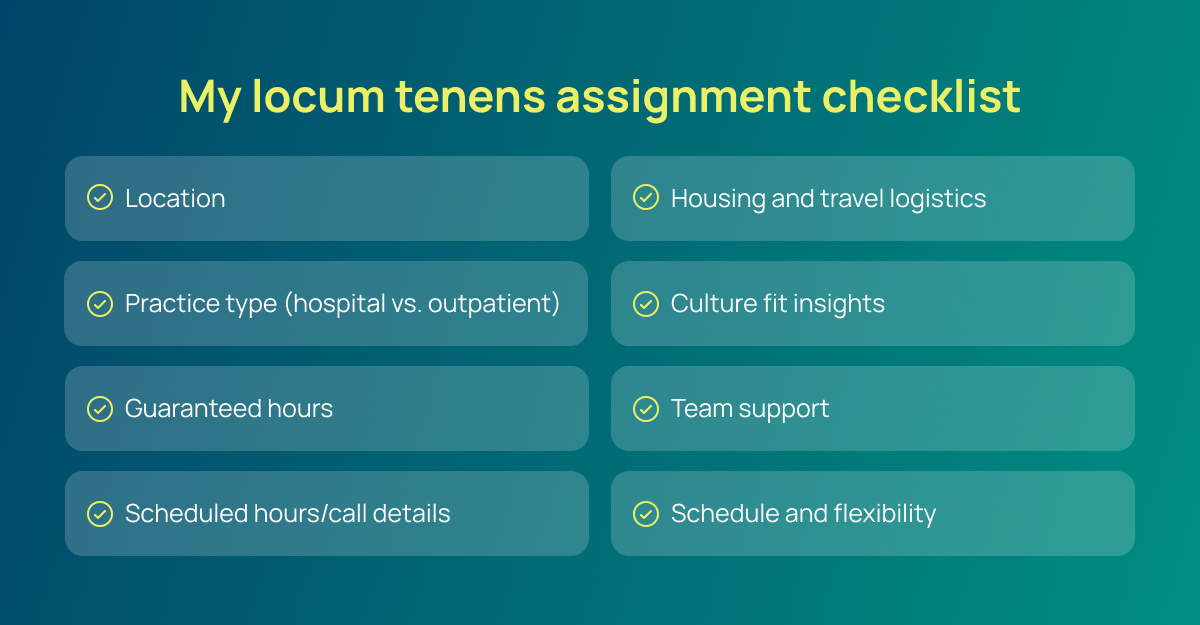
1. Location comes first
Right now, location is my number one priority. After spending about four years in the same general area, I’m ready to explore new parts of the country. Locum tenens makes adventure accessible — you can go almost anywhere in the U.S.!
2. Type of practice shapes your day-to-day
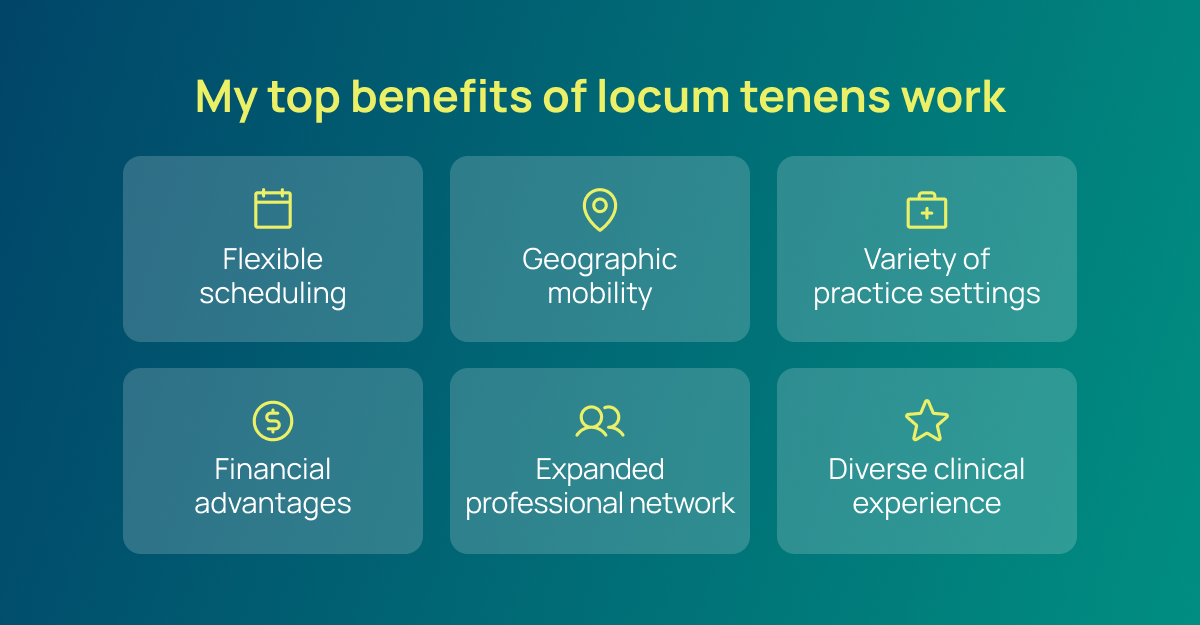
After location, I evaluate the practice setting. Most of my experience is in hospital settings, which naturally feels like home. But locum tenens gives me the option to step into outpatient facilities if I want something different. That variety is one of the biggest benefits of this career path.
3. Supportive teams matter — especially early on
When I first started, team support was a very important factor. Switching paths and stepping into a new environment can be nerve-wracking, so having a collaborative team can make all the difference.
Now, with more experience, I feel comfortable adjusting to new teams quickly, but supportive staff can still completely change your experience at a facility. I’ve been very fortunate to have a great recruiter and have leaned on Aya Locums’ experience team to offer advice and help facilitate onboarding, which makes the transitions so much easier!
4. Compensation, housing and travel logistics are key
As I look further from home, housing options and compensation all play a bigger role. If I’m going to uproot for a few months, I want to be sure the financials support that decision. Thankfully, I can rely on my recruiter and Aya Locums team to help me navigate these details, too.
5. Schedule, call and workload need to align with your life
I’m fortunate to have the flexibility to work almost any daytime schedule (I personally don’t prefer nights). And I don’t mind helping with weekend coverage when needed, because facilities often rely heavily on locums to bridge staffing gaps. I suggest using transparent websites that clearly list a facility’s scheduling expectations, so you can quickly determine if an assignment aligns with your lifestyle.
6. Culture fit: The hardest thing to predict
While culture fit can be tricky, I’ve never found it to be an issue. Two people can have completely different experiences at the same site, so I’ve learned to approach each assignment with an open mind and realistic expectations. A good recruiter can also be incredibly valuable here, too, by providing feedback from previous clinicians.
Additionally, I’ve turned to online forums and clinician groups for insight, but nothing replaces experiencing it firsthand.
7. My must-ask questions before accepting an assignment
Before signing on, I always ask my recruiter:
- Are there guaranteed hours?
If I’m scheduled for 40 hours, I want to know I’ll be compensated for 40 hours.
- What does pay look like for hours outside those that I am regularly scheduled for?
I pick up extra shifts occasionally, so I want clarity on how those hours are paid.
Those two questions alone can make or break an assignment for me.
8. Dealbreakers and lessons learned
I haven’t encountered any true dealbreakers so far, and I’m open to different types of assignments. I will say, though, that as I’ve gained locum experience, I’ve learned to prioritize compensation for required call or overtime, which wasn’t something I really considered much when I first started locum tenens.





Share post